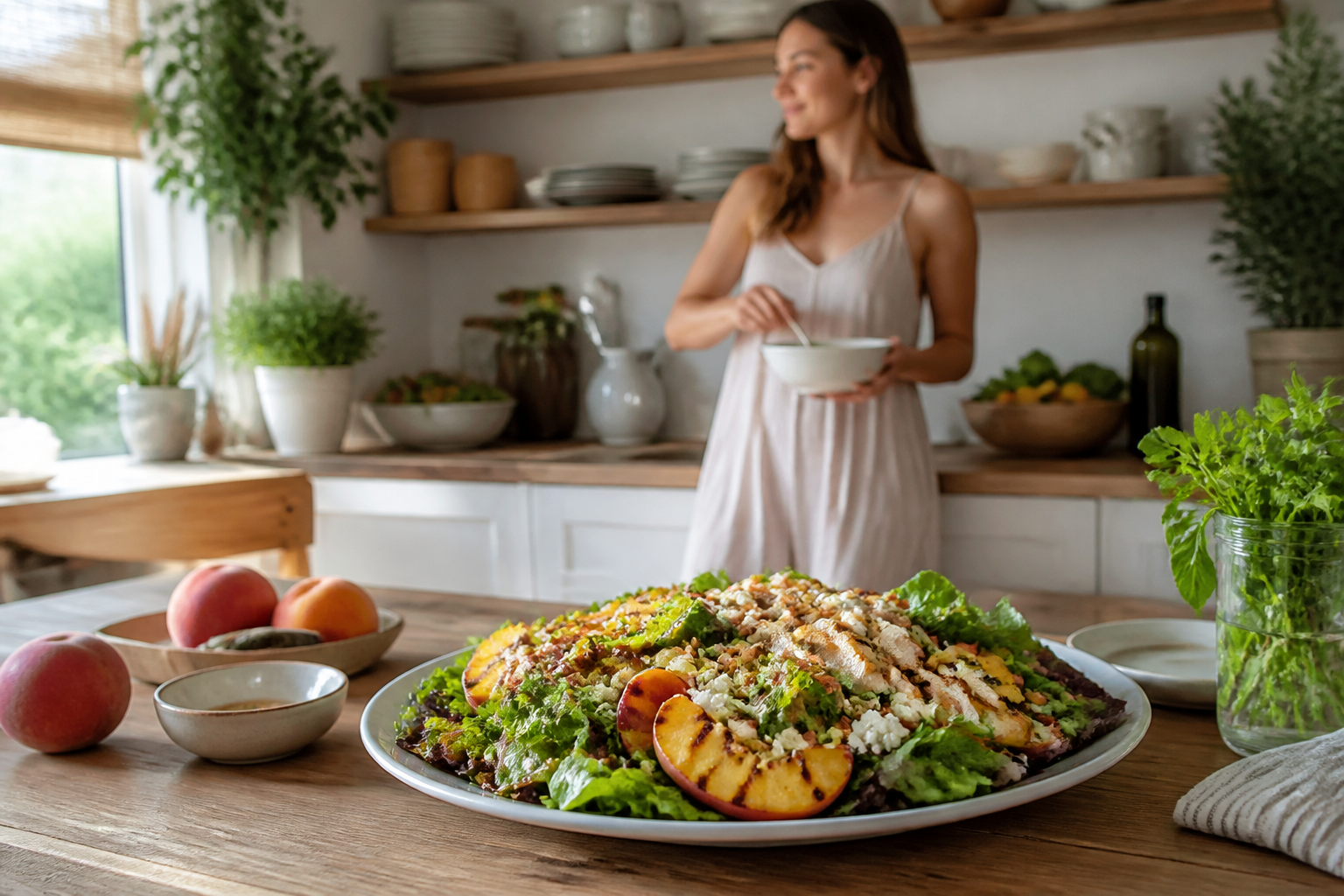
August in the Pacific Northwest means two things: stone fruit is perfect, and your kitchen is too hot to spend an hour cooking. This grilled peach and chicken salad takes 25 minutes, uses nine ingredients, and gives you complete protein plus the electrolytes and anti-inflammatory compounds your body needs when you’re training in heat.
Why this recipe right now
Peaches peak in August. They’re not just sweet — they’re loaded with vitamin C, potassium, and beta-carotene. When you’re sweating through workouts in 80-degree weather, potassium matters. It’s one of the key electrolytes you lose, and replacing it from whole food beats chugging neon sports drinks.
The chicken provides leucine-rich protein for muscle repair. The arugula and olive oil deliver polyphenols that help manage exercise-induced inflammation. This isn’t a “detox salad.” It’s a complete meal that supports recovery without sitting heavy in your gut during afternoon heat.
Ingredients
- 1.5 lbs boneless, skinless chicken thighs
- 3 ripe peaches, halved and pitted
- 6 cups arugula
- 1/4 cup raw almonds, roughly chopped
- 1/4 red onion, thinly sliced
- 3 tablespoons extra virgin olive oil
- 2 tablespoons balsamic vinegar
- 1 teaspoon Dijon mustard
- Sea salt and black pepper
How to make it
-
Prep the chicken. Pat thighs dry, season both sides with salt and pepper. Let sit at room temperature while you heat your grill or grill pan to medium-high.
-
Grill the chicken. Cook 5-6 minutes per side until internal temp hits 165°F. Remove and let rest 5 minutes, then slice against the grain into strips.
-
Grill the peaches. While chicken rests, place peach halves cut-side down on the grill. Cook 3-4 minutes until you get char marks and the fruit softens slightly. Remove and slice into wedges.
-
Make the dressing. Whisk olive oil, balsamic vinegar, Dijon, a pinch of salt, and pepper in a small bowl. Taste and adjust — it should be sharp but balanced.
-
Assemble. Divide arugula among four plates. Top with sliced chicken, grilled peach wedges, red onion, and almonds. Drizzle dressing over everything. Serve immediately.
What this gives you
Each serving delivers approximately 35g protein, 18g fat (mostly monounsaturated from olive oil and almonds), and 22g carbohydrates from the peaches. The protein-to-carb ratio works whether you’re eating this post-training or as a standalone lunch on a rest day.
The real value is in the micronutrients. Arugula provides nitrates that support blood flow. Peaches give you potassium (285mg per medium peach) and vitamin A precursors that support immune function when training load is high. Almonds add vitamin E and magnesium — both critical for muscle function and often depleted in athletes. This isn’t supplement-level dosing, but it’s consistent, bioavailable nutrition from food your body recognizes.
Variations
If you have leftover grains: Add 1 cup cooked farro or quinoa to the base. Increases carbs to about 40g per serving — better for heavy training days.
No time to grill: Use a rotisserie chicken from the store. Skip grilling the peaches and slice them raw. Still tastes good, still gets you fed in under 10 minutes.
For a performance day: Double the chicken to 3 lbs and add 2 medium sweet potatoes, cubed and roasted at 425°F for 20 minutes. Now you’re at 50g protein and 45g carbs — solid post-session fuel.
The real win
A meal you’ll actually make beats a perfect macro plan you abandon by Wednesday. This recipe doesn’t require specialty ingredients, a sous vide setup, or an hour of your evening. It uses what’s in season, what’s available at any grocery store, and what tastes good enough that you’ll eat it again next week.
Discipline beats motivation, every single day.
That applies to training and it applies to eating. The goal isn’t perfection. It’s consistency. A 25-minute meal with complete protein, healthy fats, and real carbohydrates — made three times a week — will do more for your performance than a flawless nutrition protocol you execute twice and quit.
You don’t need another complicated recipe. You need food that works with your schedule, supports your training, and doesn’t require a post-grad degree in meal prep. This is that.
— Laet