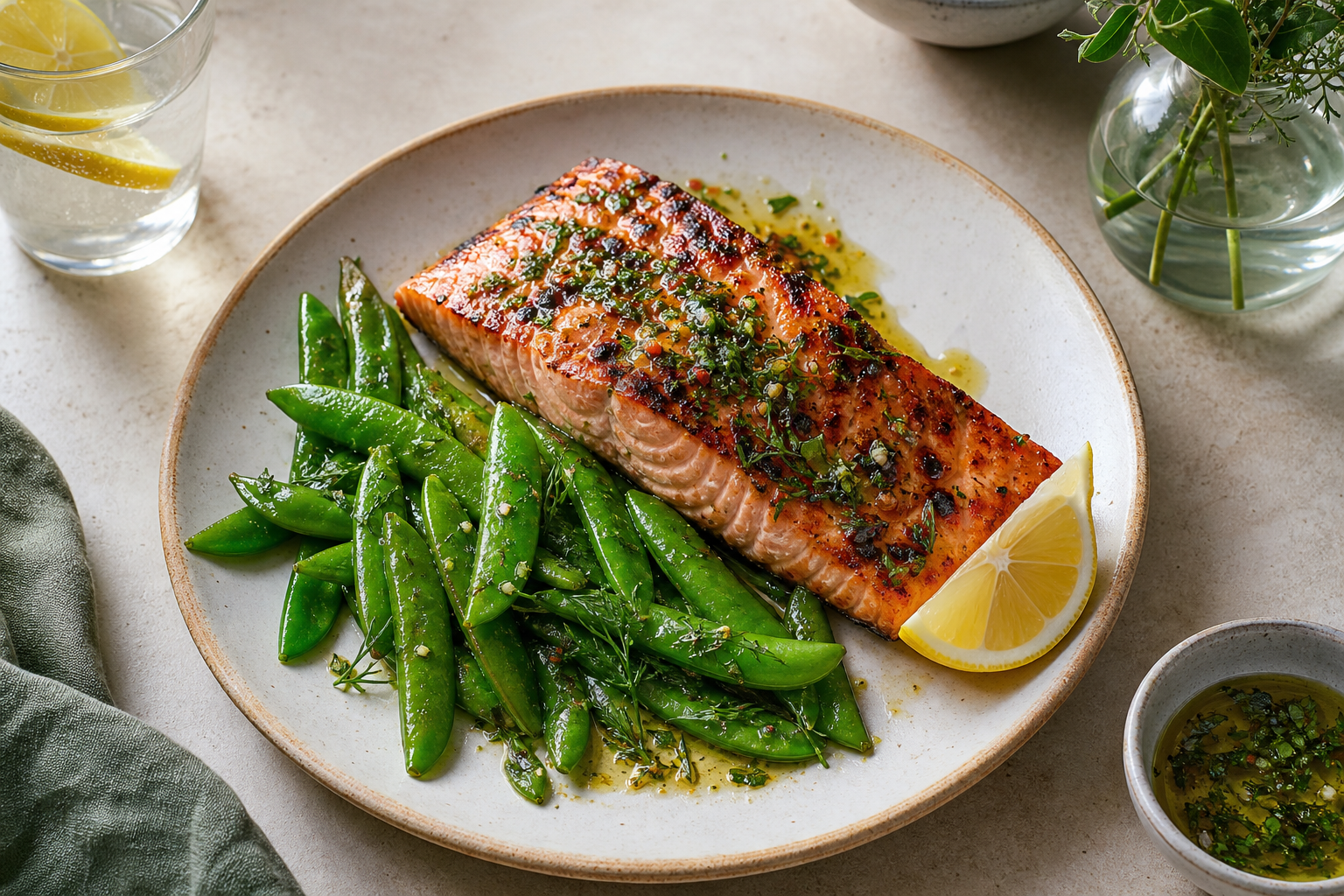
June means snap peas are crisp, salmon is in season, and you’re training harder because the sun’s finally out. You need a meal that supports recovery without wrecking your evening or requiring a culinary degree.
Why this recipe right now
Snap peas peak in June. Wild salmon runs are active. Both are anti-inflammatory powerhouses — omega-3s from the fish, polyphenols and vitamin C from the peas. If you’re lifting, running, or just trying to keep inflammation in check while managing a 50-hour week, this combination does the work without supplements or meal prep theater.
This isn’t a “clean eating” recipe. It’s a performance meal that happens to taste good and takes less time than ordering delivery.
Ingredients
- 4 salmon fillets, skin-on, 5-6 oz each (wild-caught if possible)
- 1 lb fresh snap peas, ends trimmed
- 3 tablespoons olive oil
- 1 lemon, zested and juiced
- 2 garlic cloves, minced
- 1 tablespoon fresh dill, chopped (or 1 tsp dried)
- 1 tablespoon fresh parsley, chopped
- Salt and black pepper
- Optional: 1 teaspoon Dijon mustard
How to make it
-
Preheat your grill or grill pan to medium-high. Pat the salmon fillets dry with a paper towel. Season both sides with salt and pepper. Let them sit at room temp while you prep the rest — 5 minutes is enough.
-
Make the herb oil. In a small bowl, whisk together 2 tablespoons olive oil, lemon zest, half the lemon juice, garlic, dill, parsley, and Dijon if using. Season with a pinch of salt. Set aside.
-
Grill the salmon skin-side down. Brush the grill grates with oil to prevent sticking. Place salmon skin-side down and don’t touch it for 4-5 minutes. You want crispy skin and a good sear. Flip once, cook another 3-4 minutes until just opaque in the center. Internal temp should hit 125°F if you like it medium, 135°F if you prefer it cooked through.
-
Blanch the snap peas. While the salmon cooks, bring a pot of salted water to a boil. Drop in the snap peas for 2 minutes — they should stay bright green and crisp. Drain and toss immediately with the remaining tablespoon of olive oil, remaining lemon juice, salt, and pepper.
-
Plate and finish. Place snap peas on each plate, top with a salmon fillet, and drizzle the herb oil over everything. Serve immediately.
Total time: 25 minutes. Cleanup: one pot, one bowl, one grill pan.
What this gives you
Each serving delivers roughly 35g protein, 18g fat (mostly omega-3s and monounsaturated), 8g carbs, and 4g fiber. You’re getting EPA and DHA from the salmon — the omega-3s that actually reduce inflammation and support joint recovery. Snap peas add vitamin K, vitamin C, and folate without spiking blood sugar.
This isn’t a macro-obsessed bodybuilder plate. It’s balanced, satiating, and nutrient-dense. The fat from the olive oil and salmon keeps you full. The protein supports muscle repair. The vegetables give you micronutrients that most people miss when they live on chicken and rice.
Variations
If you have extra time: Roast the snap peas at 425°F for 8 minutes instead of blanching. Add a handful of cherry tomatoes to the tray. You’ll get more caramelization and deeper flavor.
No time to grill: Pan-sear the salmon in a cast iron skillet over medium-high heat. Same timing, same result. Use the snap peas raw — toss them with the herb oil and lemon juice and call it a crunchy salad.
For a performance day: Add 1 cup cooked quinoa or fingerling potatoes on the side. You’ll bump the carbs to 35-40g, which supports glycogen replenishment if you’re training hard or have a second session that day.
The real win
A 25-minute meal you’ll actually make beats a perfect meal plan you won’t. This recipe doesn’t require exotic ingredients, a sous vide setup, or an hour of your evening. It uses what’s in season, what’s available at any grocery store, and what your body can actually use.
You’re not eating this because it’s “clean.” You’re eating it because it supports recovery, reduces inflammation, and fits into a real schedule. That’s the difference between a diet you white-knuckle through and a nutrition approach that sticks.
— Laet