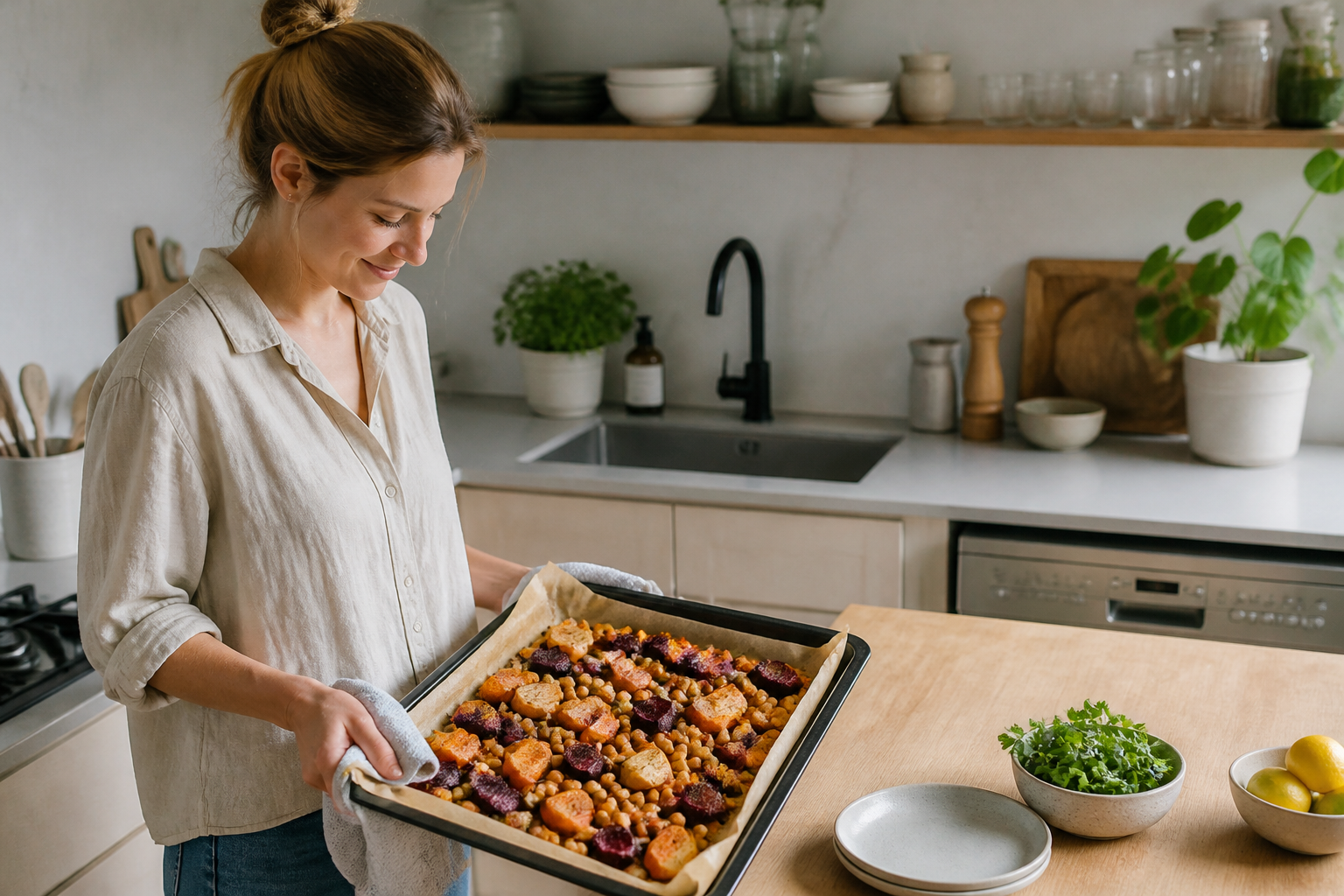
Why this recipe right now
November in the Pacific Northwest means darker mornings, colder air, and your body working harder to recover from the same training load. Root vegetables are cheap, abundant, and packed with the micronutrients your immune system needs when daylight drops and stress climbs. This isn’t about “eating seasonal” because it sounds nice—it’s about using what’s actually fresh, affordable, and nutrient-dense right now.
This sheet pan combines complex carbs for glycogen replenishment, plant protein for recovery, and tahini for anti-inflammatory fats. It takes 30 minutes start to finish, most of it hands-off. You can eat it hot Monday night or cold from the fridge Thursday afternoon. That’s the kind of flexibility that keeps you consistent.
Ingredients
- 2 medium sweet potatoes, cubed (about 1-inch pieces)
- 3 large carrots, peeled and cut into thick rounds
- 1 large red onion, cut into wedges
- 1 can (15 oz) white beans, drained and rinsed
- 3 tablespoons olive oil
- 1 teaspoon smoked paprika
- 1 teaspoon ground cumin
- Sea salt and black pepper
- 3 tablespoons tahini
- Juice of 1 lemon
- 2-3 tablespoons water (for thinning tahini sauce)
- Optional: fresh parsley for garnish
How to make it
-
Preheat your oven to 425°F. Line a large sheet pan with parchment paper. Don’t skip this—cleanup matters when you’re cooking multiple times a week.
-
Toss the vegetables. Combine sweet potatoes, carrots, and red onion on the sheet pan. Drizzle with 2 tablespoons olive oil, add paprika, cumin, salt, and pepper. Use your hands. Mix until everything’s coated.
-
Roast for 20 minutes. Spread vegetables in a single layer. Crowding = steaming. Steaming = sad vegetables.
-
Add the beans. Pull the pan out, toss the white beans with the remaining tablespoon of olive oil and a pinch of salt. Scatter them across the pan. Return to oven for 8-10 minutes until beans are slightly crispy and vegetables are fork-tender.
-
Make the tahini sauce while everything roasts. Whisk tahini, lemon juice, and water in a small bowl. Add water one tablespoon at a time until it’s pourable but not watery. Taste. Add salt if needed.
-
Serve. Plate the vegetables and beans, drizzle with tahini sauce. Garnish with parsley if you have it. If you don’t, skip it.
What this gives you
One serving delivers roughly 350 calories, 45g carbs, 12g protein, and 14g fat—most of it monounsaturated from olive oil and tahini. The sweet potatoes and carrots provide beta-carotene (vitamin A precursor), which supports immune function and tissue repair. White beans add resistant starch and fiber, both of which support gut health and stable blood sugar. Tahini brings calcium, iron, and sesame lignans—compounds with documented anti-inflammatory effects.
This isn’t a high-protein meal. It’s a recovery meal. If you’re training hard, pair it with 4-6 oz of grilled chicken, salmon, or a couple of fried eggs. If you’re in a lower-intensity phase or eating this as lunch, it stands alone just fine.
Variations
If you have extra time: Add a handful of kale or spinach in the last 3 minutes of roasting. Greens wilt fast and add folate and magnesium without changing the flavor profile.
No time for roasting: Use a bag of pre-cut butternut squash and skip the peeling. Swap canned chickpeas for white beans if that’s what’s in your pantry. The recipe doesn’t care about your brand loyalty.
For a performance day: Double the beans, add 4 oz cooked quinoa after roasting, and top with a poached egg. You’ll hit 25g protein and 60g carbs—enough to support an evening lift or a long run the next morning.
The real win
A meal you’ll actually make beats a perfect macro-balanced plan you’ll skip because it requires 14 ingredients and a food processor. This recipe uses vegetables that last two weeks in your fridge, pantry staples, and one pan. You can make it twice in one week and not feel like you’re eating leftovers because the tahini sauce changes everything.
Consistency isn’t about perfection. It’s about having a rotation of 5-7 meals you can execute on a Tuesday night when you worked late and still need to eat something that supports your goals. This is one of those meals.
— Laet