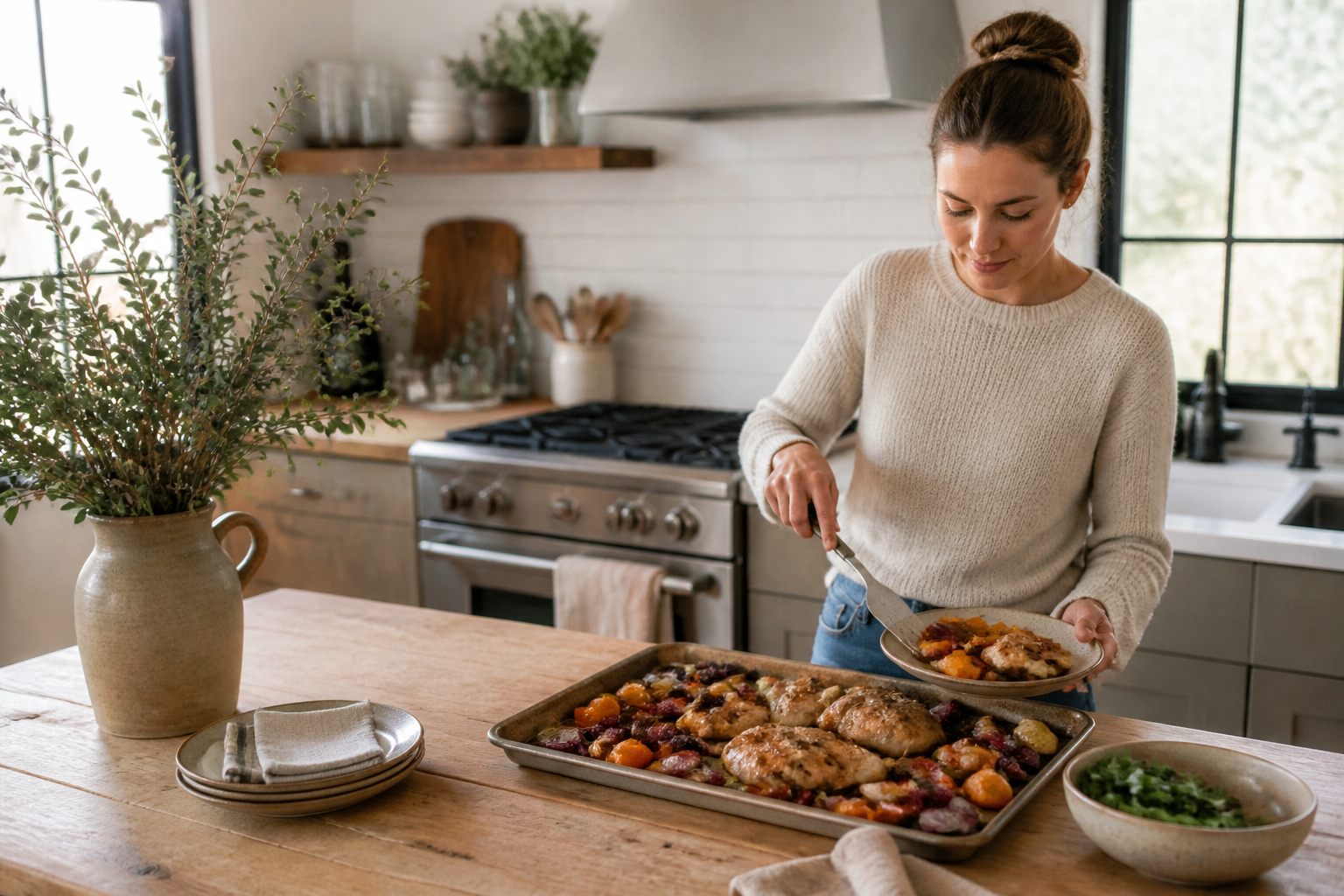
November in Seattle means rain, early darkness, and the kind of cold that makes your joints remind you they exist. Your training doesn’t stop. Your schedule doesn’t ease up. You need food that supports recovery without requiring a second shift in the kitchen.
This sheet pan delivers complete protein, slow carbs, and anti-inflammatory fats in under 30 minutes of actual work. No blender. No exotic ingredients. No pretending you have time to spiralize anything.
Why this recipe right now
Root vegetables peak in November — sweet potatoes, carrots, parsnips. They’re dense in complex carbohydrates your muscles actually use for glycogen replenishment after a session. The natural sugars caramelize under high heat, which means flavor without added anything.
Chicken thighs stay moist at 425°F. They’re higher in iron and zinc than breasts, both critical for immune function when you’re training through cold season. The fat content means satiety. You won’t be looking for snacks an hour later.
Ingredients
- 8 bone-in, skin-on chicken thighs (about 2.5 lbs)
- 2 medium sweet potatoes, cubed (1-inch pieces)
- 3 large carrots, cut into 2-inch chunks
- 2 parsnips, cut into 2-inch chunks
- 1 red onion, cut into wedges
- 3 tablespoons olive oil
- 2 teaspoons smoked paprika
- 1 teaspoon garlic powder
- 1 teaspoon dried thyme
- Sea salt and black pepper
- Optional: 2 tablespoons fresh parsley, chopped
How to make it
1. Preheat oven to 425°F. Line a large sheet pan with parchment paper. If you skip this, you’ll spend 15 minutes scrubbing caramelized onion off metal. Don’t skip this.
2. Prep vegetables. Toss sweet potatoes, carrots, parsnips, and onion in a large bowl with 2 tablespoons olive oil, 1 teaspoon paprika, garlic powder, thyme, salt, and pepper. Spread them in a single layer on the sheet pan, leaving space for the chicken.
3. Season chicken. Pat thighs dry with paper towels. Rub with remaining 1 tablespoon olive oil and 1 teaspoon paprika. Season both sides with salt and pepper. Place skin-side up on the sheet pan, nestled among the vegetables.
4. Roast for 35-40 minutes. Chicken is done when internal temperature hits 175°F and skin is crispy. Vegetables should be fork-tender and edges browned.
5. Rest for 5 minutes. Let the pan sit before plating. Garnish with fresh parsley if you have it. Serve immediately or portion into containers for the next three days.
Total time: 25 minutes active, 40 minutes hands-off.
What this gives you
Each serving delivers approximately 35g protein, 30g carbohydrates, and 18g fat. The protein-to-carb ratio makes this ideal for post-training recovery or a pre-rest-day dinner when you need to replenish glycogen without overeating.
Sweet potatoes and carrots are loaded with beta-carotene, which your body converts to vitamin A — essential for tissue repair and immune response. Parsnips add fiber and potassium for muscle function. The chicken skin provides collagen precursors and fat-soluble vitamin absorption. This isn’t “clean eating.” This is complete eating.
Variations
If you have extra time: Add 1 cup Brussels sprouts (halved) or 1 fennel bulb (sliced) to the vegetable mix. Both roast well at this temperature and add bitter contrast to the sweet roots.
No time variation: Use boneless, skinless thighs. They’ll cook in 25 minutes instead of 40. You lose the crispy skin, but the meal still works.
For a performance day: Double the sweet potatoes, reduce the chicken to 6 thighs. You’ll shift the macro balance toward carbs for glycogen loading before a long session or competition.
The real win
You can find a perfect recipe on Instagram. You can save it, screenshot it, and never make it because it requires three specialty oils and a mandoline you don’t own.
Or you can make this. Tonight. With vegetables from any grocery store and a pan you already have. It reheats without turning to rubber. It doesn’t require explanation when you eat it in front of your kids or pack it for lunch.
The best nutrition plan is the one you’ll actually execute. Discipline beats motivation, every single day. This recipe removes the friction between intention and action. That’s the win — not the macros, not the anti-inflammatory profile. The fact that you’ll make it more than once.
— Laet